
Large-scale water treatment for facilities that cannot afford to run dry.
We engineer, build and maintain large water treatment plants from 20,000 to 200,000+ litres per day, tailored to your exact source water.
for shopping centers, schools, farms, lodges, and estates. Whether your source is a borehole, dam, river, spring, or municipal supply, our process remains the same: tested first, engineered second, supported for the life of the plant.















Why Large Water Systems Fail
Whether the source is municipal, a borehole, a dam, a river or a spring. A water system is a water test, system design, install, monitor and the maintaining of your system. Where water system installations go wrong:
01
The water is never actually tested
Skipping water testing virtually guarantees system failure. Without lab analysis, you risk specifying wrong media, unsuitable membranes, or softeners when you actually need iron and manganese removal. The plant may run mechanically, but the water will fail compliance standards—leaving technical teams blind to the root cause.
Our experts collect on-site samples for SANAS-accredited testing to ensure precise design.02
Peak water demand and usage calculations
A plant sized only on average daily use risks running storage tanks dry during sustained high-demand periods, such as peak festive seasons. Conversely, over-specifying upfront wastes capital and leaves equipment standing idle, increasing mechanical wear and biofouling risks. We engineer every system with a modular, scalable design—precisely sizing your treatment capacity and tank refill rates today, while ensuring you can seamlessly expand capacity as your future water demand grows.
Sized storage, boosting and automatic changeover03
Lack of monitoring and service schedules
It's never a "fit and forget". Media exhausts, membranes fail, and dosing drifts—without proactive care, systems silently degrade over time. Our integrated IoT platform gives you real-time visibility into plant health and tank levels straight from your phone or desktop. We monitor performance continuously and manage service schedules proactively, resolving issues long before a tap ever runs dry.
IoT monitoring and a preventative service SLA
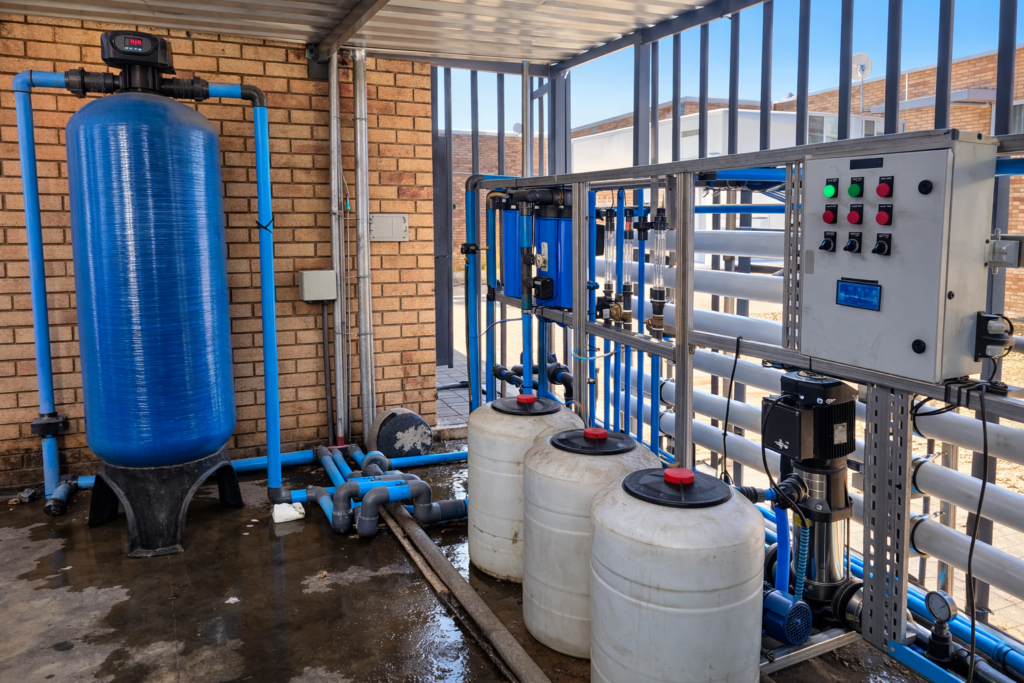
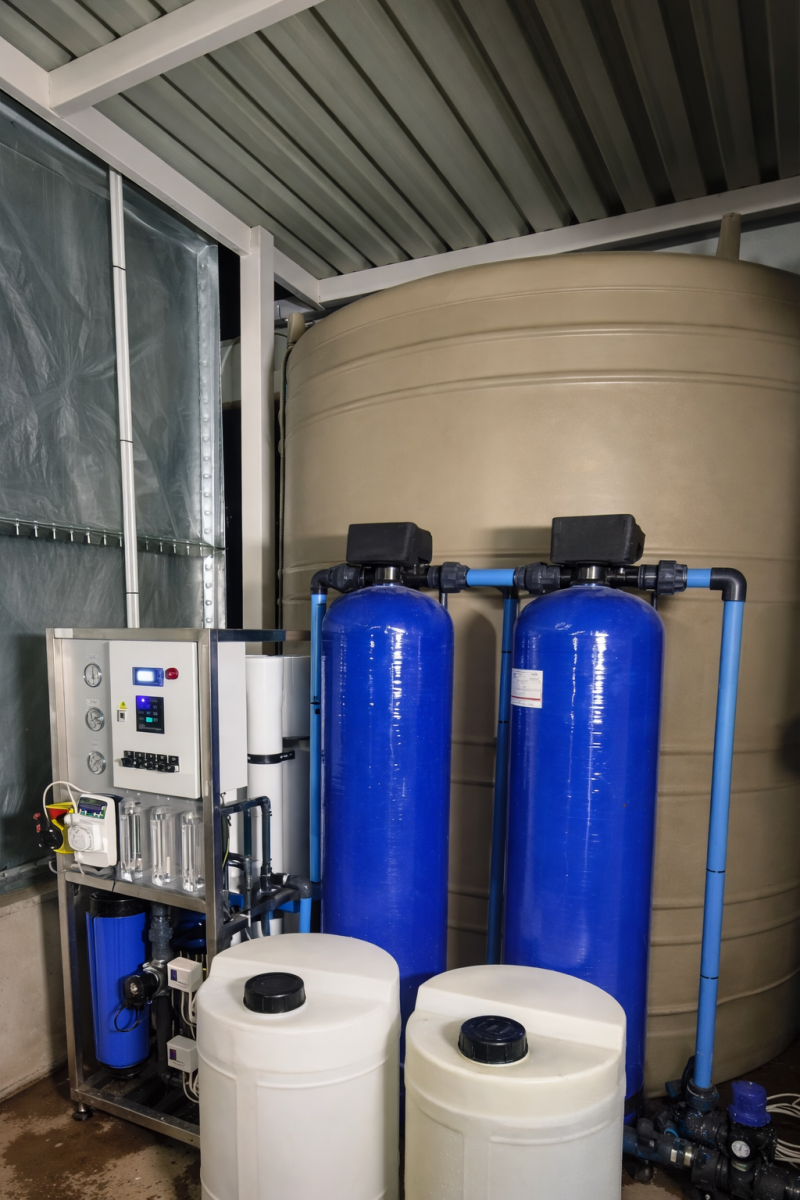
A Water System Built to Your Need
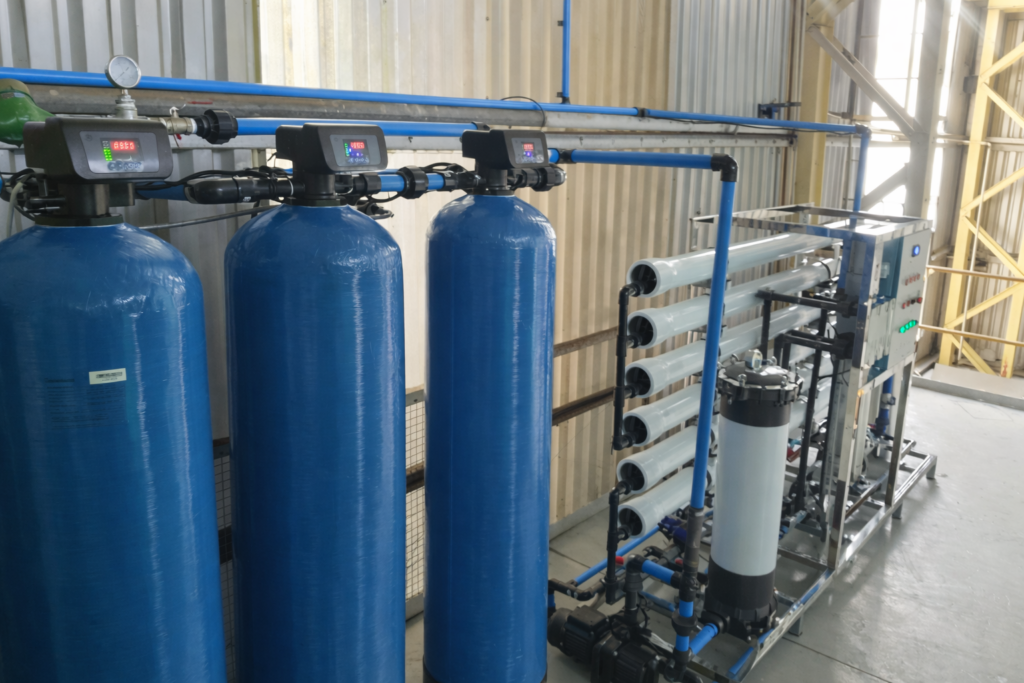
We don’t supply standardised equipment and hope it fits. Every plant is designed around your actual water demand, infrastructure, source water quality and operational risk. We build for scalability, so that expansion extends your current setup rather than replacing it.
Essential backup
Stored capacity, controlled pressure delivery and automated changeover, so a municipal interruption doesn't become a closure.
- Site-specific storage tanks
- Booster pump system
- Automatic level control
- Basic filtration where required
Advanced facility backup
Larger storage, variable-speed pumping, water quality monitoring and remote alerts, so you hear about a developing problem before a tenant does.
- VSD pump systems
- IoT tank level & flow monitoring
- Pressure management
- Remote alerts and reporting
Achieving water independence
Natural raw water integration, engineered treatment, treated storage and pressure-controlled distribution. A facility that supplies itself.
- Borehole/Raw water supply & integration
- Engineered treatment train
- Treated water storage
- Facility-wide distribution
Plants we designed and still maintain till today.
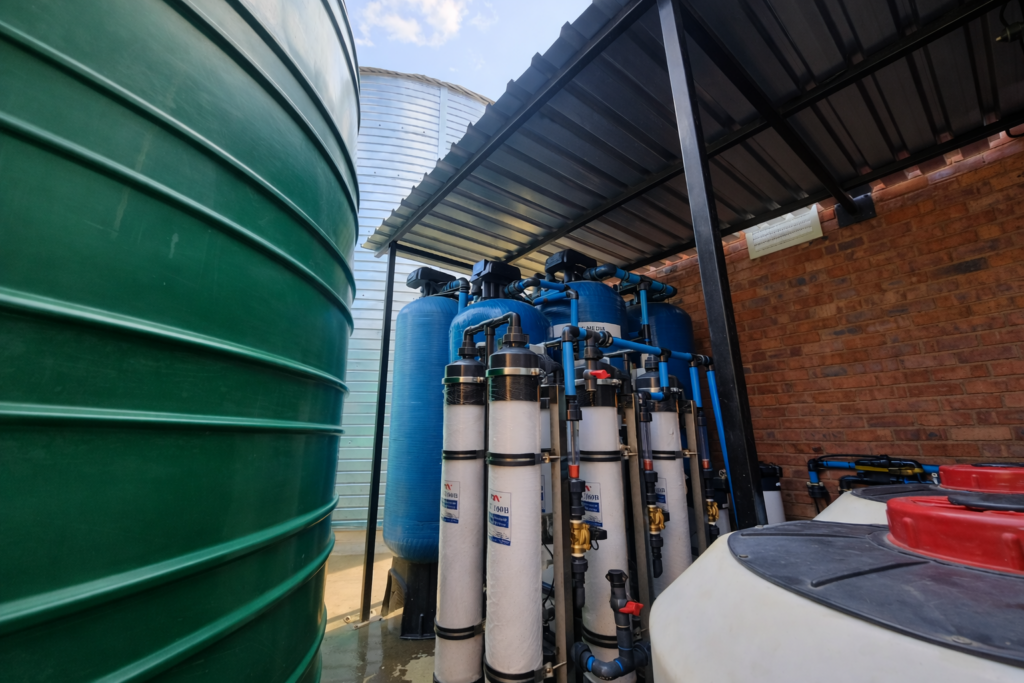
120,000L/Per Day · ULTRAFILTRATION HYBRID
Three sources. One supply
For an entire shopping centre
A hybrid plant integrating dam, borehole and municipal water into a single treated distribution system, designed for bacterial reduction and the removal of sediment and silt from highly variable sources. It runs today under our maintenance programme.
Every sector has a different reason for needing the water to work.
Shopping Centres
Tenant leases assume water. A supply failure is a trading interruption across every store at once, and hard borehole water scales the plumbing you're contractually responsible for.
Typical: 4,000–6,000 LPH hybrid or nanofiltrationSchools
Ablutions, kitchens and drinking points for hundreds of children, with a duty of care that makes water quality non-negotiable.
Typical: Backup storage + SANS 241 potable treatmentFarms
Boreholes, dams and rivers feeding irrigation, livestock, processing and the homestead — each with a different quality requirement from the same raw source.
Typical: Multi-source integration + blendingLodges
Guests notice water before they notice anything else. Often remote, often off dam or river water, always judged on clarity, pressure and taste.
Typical: 1,000–2,000 LPH sediment & organic reductionEstates
A shared reticulation network serving many homeowners, where one water quality problem becomes a body-corporate problem and every resident is a stakeholder.
Typical: Bulk treatment + IoT monitoringIndustrial & Commercial
Process water with a specification, not just a supply. pH stability, dissolved solids and hardness control where the water is an input to what you produce.
Typical: 5,000 LPH RO, process-gradeThese are the installations we're asked for most often — not the limit of what we build. If your facility isn't on this list, or your requirement doesn't match any of them, nothing changes about the approach: we test the water, then design to the result. Tell us what you're working with.
No water source yet?
You don’t need a borehole to start.
We don’t drill boreholes — we work alongside the contractors who do, and we’ll bring the right one to your site. You stay with one team from the first water test through to the treatment plant and the service plan that keeps it running.
Expansion of our Services
Add-on
Rainwater Harvesting
A supplementary source that reduces municipal draw and strengthens the whole water balance. Collection assessment, pre-filtration, storage, pumping and treatment where required.
Consulting
Water Demand Management
Often the cheapest litre is the one you stop losing. Audits, leak detection, pressure management, sub-metering and consumption monitoring. Frequently the first thing we recommend.
Technology
Treatment Capability
Reverse osmosis, nanofiltration, ultrafiltration, media and sediment filtration, disinfection and hardness reduction. Selected on verified laboratory results, and aligned to SANS 241 where potable water is required.
Not sure which of these you actually need?
Neither is anyone else before the water is tested. Send us your site details and we’ll tell you what the analysis would need to cover.
Five phases. The first one is a laboratory, not a salesman.
PHASE 01
Laboratory Water Analysis
SANAS-accredited testing to establish the actual composition of your water. Nothing is specified until we know what's in it — the single step that separates an engineered plant from a guess.
PHASE 02
Engineering Design
A treatment train designed around your verified water quality, daily demand, available plant room, infrastructure and operational risk. Modular, so it extends later without being replaced.
PHASE 03
Installation & Commissioning
Turnkey installation, calibration, performance verification and operator handover. An automatic treatment train — switch it on and have water.
PHASE 04
Smart Monitoring
IoT tank level, flow and water quality monitoring with remote alerts, so you find out about a developing problem from a notification rather than from a tenant.
PHASE 05
Maintenance & Optimisation
Scheduled preventative service, consumable and media replacement, water quality verification and continuous improvement under our Water Security Care SLA.
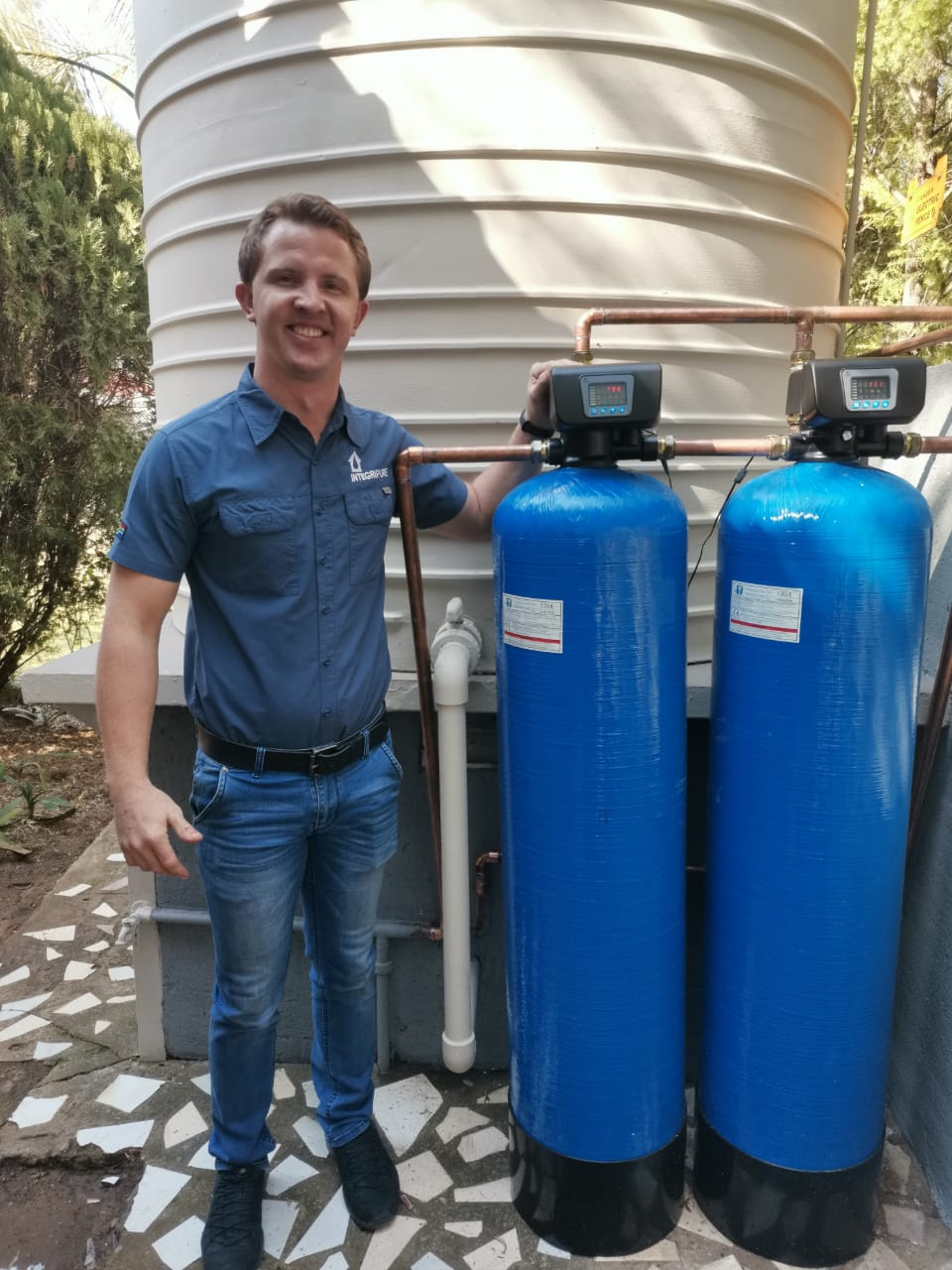
Our own team — install, commission, maintain
The questions we get on every first call.
How long does a project actually take?
Can we start small and expand later?
We already have a plant. It's just not working properly.
Will the water be safe to drink?
Do you handle multiple sites?
What happens after installation?
Do you drill the borehole?
Tell us about the site. We'll do the thinking.
Newcastle, 2940
Water Filtration Experts. Engineered, data-driven water treatment and water independence solutions for commercial, agricultural and institutional facilities.
WATER SECURITY · BUSINESS CONTINUITY · INDEPENDENCE
Contact
38 Victoria Road
Hutten Heights
Newcastle, 2940